 TITLE: How to Style Thick Hair : The Best 50 guide. How to Style Thick Hair Men Can Actually Manage
Last updated: September 1, 2026
If your hair puffs up instead of lying down, holds a “helmet” shape by noon, or fights every product you throw at it, you don’t have bad hair — you have thick hair, and it needs a different playbook than the one most styling advice assumes. Learning how to style thick hair men actually deal with day-to-day comes down to three things: the right cut, the right product for your hair’s texture, and a technique that works with the volume instead of against it.
In this guide you’ll learn:
- Why thick hair behaves differently than fine or medium hair
- The haircuts that make thick hair easier to style, not harder
- Which products actually control thick hair (and which ones just add weight)
- A step-by-step drying and styling routine
- How to fix the most common thick-hair problems: poofiness, frizz, and “the triangle”
What Counts as Thick Hair?
Thick hair refers to the diameter of each individual strand, not how much hair you have on your head — that’s density, a separate trait. A person can have thick strands and low density, or fine strands and very high density. Most men with genuinely thick hair have strands with a wider diameter, which makes each hair stiffer and more resistant to lying flat.
That stiffness is the root of nearly every styling complaint: it’s why thick hair holds height instead of falling, why it looks bigger after a haircut than expected, and why lightweight products barely make a dent in it.
Why Thick Hair Needs a Different Approach
Most generic hair advice is written for medium-density, medium-texture hair, which is part of why it fails for thick hair. Three practical differences matter most:
- Volume compounds. Thick strands plus decent density means volume adds up fast — a length that looks tidy on someone with fine hair can look like a hedge on thick hair.
- Products need more hold, not more shine. Lightweight creams and glossing serums look great on fine hair but disappear into thick hair without controlling it.
- Cutting technique matters more than product. A haircut that doesn’t account for thick hair’s weight distribution will fight your styling routine every single day, no matter what you put in it.
Best Haircuts for Thick Hair
The cut is the single biggest factor in how easy your hair is to style. A good barber working on thick hair should be removing bulk, not just length.
Texturizing and Point Cutting
Ask your barber for texturizing shears or point-cutting on the mid-lengths and ends. This removes internal weight without shortening the overall length, which is usually what turns a “poofy triangle” into a manageable shape.
Shorter Sides, Longer Top
A classic taper or fade on the sides with more length on top gives thick hair somewhere to go. The shorter sides reduce overall volume near the ears, while the longer top can be styled into texture rather than fighting to lie flat.
Crew Cuts and Textured Crops
For low-maintenance thick hair, a crew cut or textured crop keeps length short enough that the hair’s natural texture does most of the styling work, cutting your morning routine down to a couple of minutes.
Pro tip: Bring a photo of a style you like and mention “thick hair” specifically when you sit in the chair. A barber who knows they’re cutting thick hair will remove weight differently than they would for fine hair, even for the same visual style.
How to Style Thick Hair: Step-by-Step
Here’s a routine that works for most thick-hair types, whether you’re going for a natural texture look or something more polished.
Step 1: Towel-dry, don’t rub. Squeeze water out with a towel instead of rubbing, which roughs up the cuticle and increases frizz.
Step 2: Apply product to damp hair. Thick hair absorbs and distributes product better when it’s damp rather than fully dry or soaking wet.
Step 3: Choose a heavier hold product. A matte clay, strong-hold paste, or pomade gives thick hair the control lighter creams can’t provide.
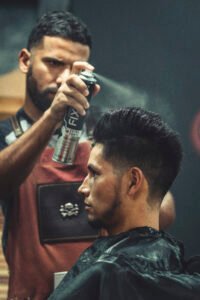
Step 4: Blow-dry with direction, not just heat. Use a comb or brush to guide hair the direction you want it to fall while drying — this is often more important than the product itself.
Step 5: Style from the roots first. Work product into the roots before the ends; thick hair’s volume problem usually starts at the root, not the tip.
Step 6: Finish with a light comb-through, not more product. Adding more product to “fix” a look usually just adds weight and grease. A comb or fingers reset the shape better than a second product application.
Best Products for Thick Hair
| Product Type | Key Feature | Best For | Typical Cost | Hold Level |
|---|---|---|---|---|
| Matte Clay | Strong hold, no shine | Textured crops, natural looks | $12–$25 | High |
| Water-Based Pomade | Restyleable, medium shine | Slicked or classic styles | $10–$20 | Medium–High |
| Fiber/Paste | Flexible, buildable texture | Messy or tousled styles | $12–$22 | Medium |
| Sea Salt Spray | Adds grit and texture | Beach-wave or undone looks | $8–$15 | Low–Medium |
| Anti-Frizz Serum | Smooths cuticle, light | Humid climates, straighter looks | $10–$18 | Low |
Recommendation: For most thick hair types, a matte clay or strong-hold paste gives the best balance of control and natural finish. Reserve pomades for when you specifically want a slicked, shinier look.
Common Thick Hair Mistakes to Avoid
- Using too little product. Thick hair typically needs 1.5–2x the amount fine hair needs to see any real effect.
- Skipping the blow-dry step. Air-drying thick hair often locks in the exact shape you’re trying to avoid.
- Choosing lightweight, “natural finish” products. These are usually formulated for fine or medium hair and won’t hold thick strands down.
- Cutting too much length without removing bulk. Going shorter without texturizing can make thick hair look bigger, not smaller.
- Washing every day. Overwashing strips natural oils that help thick hair sit down; every other day is usually plenty.
Thick Hair vs. Other Hair Types
| Trait | Thick Hair | Fine Hair | Curly/Coily Hair |
|---|---|---|---|
| Strand diameter | Wide | Narrow | Varies, often wide |
| Product needs | Heavy hold | Lightweight | Moisture-focused |
| Main challenge | Volume/poof control | Lack of volume | Definition + shrinkage |
| Best cut style | Texturized, shorter sides | Layered for volume | Shape-cut for curl pattern |
Frequently Asked Questions
How do I stop my thick hair from looking triangular?
A triangular shape usually means there’s too much bulk left in the mid-lengths. Ask your barber to texturize or point-cut that area specifically, and style with a stronger-hold product applied at the roots to control lift.
What’s the best haircut for thick hair that’s low maintenance?
A crew cut or short textured crop is generally the lowest-maintenance option, since the shorter length limits how much the natural volume can build up during the day.
Do I need to blow-dry thick hair every time?
Not always, but directional blow-drying makes a bigger difference for thick hair than for most other hair types, since air-drying tends to lock in whatever shape the hair naturally wants to take.
Is thick hair the same as having a lot of hair?
No. Thickness refers to the width of each strand, while density refers to how many strands you have. You can have thick, low-density hair or fine, high-density hair — they require different care.
What products should I avoid with thick hair?
Very lightweight creams, glossing serums, and low-hold gels marketed for “natural finish” styles usually don’t provide enough control for thick strands and can leave hair looking flat in some areas and poofy in others.
How often should thick hair be cut?
Every 4–6 weeks is typical, since thick hair loses shape faster as it grows out and regains the bulk a texturized cut was designed to remove.
Can thick hair be styled straight?
Yes, with a round brush and blow dryer, or a flat iron on damp-to-dry hair using a heat protectant. Because the strands are stiffer, thick hair usually needs a higher heat setting and more tension to fully straighten than fine hair does.
Why does my thick hair get frizzy in humidity?
Thick, coarse strands often have a more porous cuticle that absorbs moisture from the air, causing swelling and frizz. An anti-frizz serum or leave-in conditioner applied before styling can help create a barrier against humidity.
Conclusion
Thick hair isn’t a problem to fix — it’s a texture that needs the right cut and the right product weight to work with, not against. Get a haircut that removes bulk rather than just length, switch to a heavier-hold product than you might expect, and use directional blow-drying to guide the shape before it dries on its own.
Next steps:
- Book a cut and specifically mention “thick hair” so your barber texturizes appropriately
- Swap your current product for a matte clay or strong-hold paste if you’re using something lightweight
- Try the damp-application, root-first styling routine above for one week and adjust from there
This article reflects general grooming and styling practices and is intended as educational information, not a guarantee of results, which vary by hair type, climate, and individual hair chemistry.