French Crop Fade: The Complete Styling & cutting guide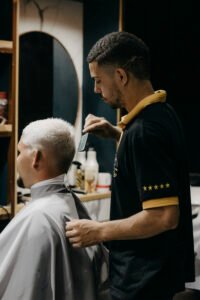
Last updated: August 2026
The French crop fade is one of the most requested men’s haircuts of the last few years — and for good reason. It takes the classic French crop (short, textured top with a fringe swept forward) and pairs it with a tight fade on the sides and back, creating a style that’s sharp enough for the office and relaxed enough for everything else.
This guide covers what the cut actually is, how it’s done, how to style it day-to-day, the fade variations worth knowing, common mistakes, and maintenance — everything you need whether you’re getting it for the first time or trying to keep it looking sharp between visits.
In this guide:
- What a French crop fade is and how it differs from a plain French crop
- The cutting process, step by step
- How to style it (short vs. longer fringe, product choices)
- Fade height options and which suits which face/hair type
- Maintenance schedule and at-home upkeep
- Common mistakes people make with this cut
- FAQ covering cost, suitability, and comparisons to similar styles
What Is a French Crop Fade?
A French crop fade is defined as a short-to-medium crop haircut — cropped, textured hair on top with a straight-ish fringe — combined with a graduated fade on the sides and back that blends from skin or very short at the bottom up into the longer top length.
The “French crop” part refers to the top: it’s kept short (usually 1–2 inches), cut with texture rather than smooth layers, and worn forward into a soft fringe rather than swept back or to the side. The “fade” part refers to the sides: instead of a straight clipper guard all the way up (like a classic crew cut), the sides are tapered gradually, disappearing into skin or a very short guard near the ears and hairline.
Together, the combination gives you a cut that looks tidy and low-maintenance from the sides, with just enough length and texture on top to style differently depending on the day.
How it differs from related cuts:
- A French crop without a fade uses a shorter clipper guard on the sides (like a 3 or 4) rather than a graduated blend, so it looks less sculpted at the sides.
- A crew cut is generally kept shorter and flatter on top, without the forward fringe.
- A textured crop is a broader term that can include the French crop as one style within it.
Why the French Crop Fade Has Stayed Popular
The style has held up because it solves a common problem: it looks deliberate and groomed without requiring daily styling effort. The fade does most of the visual work — it’s what makes the cut look sharp — while the top stays flexible enough to be styled messy, slicked, or textured depending on the occasion.
It also works across a wide range of hair types (straight, wavy, and curly hair can all carry a version of it, with small adjustments to top length and product) and suits most face shapes because the fringe can be adjusted to soften or elongate the face as needed.
How the French Crop Fade Is Cut: Step-by-Step
Here’s the general process a barber follows for this cut. Details vary by barber and by how dramatic you want the fade, but the sequence is fairly standard.
- Consultation and length check — The barber confirms your target top length (typically 1–2 inches) and fade height (low, mid, or high — more on this below).
- Fade the sides and back first — Using clippers with graduated guards (or clipper-over-comb technique), the barber blends from skin or a very short guard near the hairline up to a longer guard where the sides meet the top.
- Blend the fade line — The transition zone gets extra attention with clippers or shears to remove any visible lines between guard lengths, creating a smooth gradient.
- Crop and texturize the top — The top is cut short and textured, usually with scissor-over-comb or point-cutting techniques, to create the choppy, piecey look characteristic of a crop rather than a flat, blunt cut.
- Cut and shape the fringe — The front section is cut to fall forward, usually just above or at the eyebrows, and thinned slightly if the hair is thick so it doesn’t sit too heavy.
- Detail the hairline and edges — A straight razor or trimmer cleans up the neckline, sideburns, and hairline for a crisp finish.
- Style and finish — The barber applies a small amount of product (matte clay or paste) and shows you how to push the fringe forward for the finished look
Fade Height Options for a French Crop
The fade height changes the overall look of the cut significantly, so it’s worth understanding the options before you sit in the chair.
| Fade Height | Where It Starts | Best For | Maintenance Frequency | Overall Look |
|---|---|---|---|---|
| Low fade | Just above the ears | Conservative or workplace settings | Every 4–5 weeks | Subtle, understated |
| Mid fade | Roughly temple height | Most face shapes, versatile | Every 3–4 weeks | Balanced, most popular choice |
| High fade | Above the temple, near the crown sides | Thicker hair, bold styling | Every 2–3 weeks | Sharp, high-contrast |
| Skin fade | Can start at any height, goes to bare skin | Anyone wanting max contrast | Every 2–3 weeks | Most dramatic, needs frequent upkeep |
| Taper fade | Gradual, no true “start” point | Curly or coarser hair, softer transition | Every 4–6 weeks | Subtle, natural blend |
Recommendation: For a first-time French crop fade, a mid fade is the safest starting point — it’s versatile, doesn’t require as frequent touch-ups as a high or skin fade, and works with almost any face shape or hair texture.
Styling a French Crop Fade
Styling this cut is one of its biggest selling points — it doesn’t take long, and there’s real room for variation depending on your hair type and how much time you have.
Basic daily routine:
- Start with damp (not soaking wet) hair.
- Apply a small, coin-sized amount of matte clay or paste — avoid heavy gels or waxes, which tend to weigh down the shorter, textured top.
- Work the product through with your fingers, not a comb, to preserve texture.
- Push the fringe forward and slightly to one side rather than straight down, which tends to look more natural.
- Let it air-dry or use a hair dryer on low heat for extra volume.
Styling variations:
- Messy/textured: Use a lighter matte product and scrunch rather than comb for a lived-in look.
- Slick and structured: Use a stronger-hold clay and comb the fringe into a neater, more deliberate shape — this version reads more formal.
- Wet-look: A small amount of pomade with shine gives a sharper, more polished finish, popular for evening or dressier occasions.
- Curly/wavy hair: A curl cream or light styling gel instead of clay tends to hold curl pattern better without weighing hair down.
Common Mistakes People Make With This Cut
A few recurring issues come up with the French crop fade, mostly around communication with the barber or at-home upkeep:
- Going too short on top. If the top is cut too close to the fade length, you lose the contrast that makes the style work, and it starts to look like a plain fade rather than a crop.
- Skipping fade maintenance. Because the fade grows out faster than the top, waiting too long between cuts causes the graduated blend to disappear, leaving an uneven, patchy look at the sides.
- Using the wrong product. Heavy waxes or gels flatten the texture that defines the crop; matte, lightweight products work better for most hair types.
- Not specifying fade height clearly. “Fade” means different things to different barbers — bringing a reference photo avoids ending up with a much higher or lower fade than you wanted.
- Cutting the fringe too blunt. A dead-straight fringe line can look unintentionally severe; texturizing the ends softens the overall effect.
Maintenance and Upkeep
The fade grows out faster than the top does, which is the main maintenance consideration with this style.
- Fade touch-ups: Every 2–4 weeks depending on fade height (higher and skin fades need more frequent visits).
- Full cut (top + fade): Every 4–6 weeks is typical, since the top can grow out more before it needs reshaping.
- At-home upkeep between visits: Trimming stray hairs around the neckline and ears with a trimmer can extend the time between full barber visits, though it won’t maintain the actual fade blend.
French Crop Fade vs. Similar Styles
| Style | Top Length | Side Treatment | Styling Effort | Best For |
|---|---|---|---|---|
| French crop fade | Short, textured, forward fringe | Graduated fade | Low-medium | Versatile, most face shapes |
| French crop (no fade) | Same as above | Short clipper guard, no blend | Low | Lower-maintenance option |
| Textured crop | Slightly longer, more layered | Varies (fade or guard) | Medium | Thicker or wavy hair |
| Crew cut | Very short, flat | Short guard or fade | Very low | Minimal styling preference |
| Caesar cut | Short, straight-across fringe, no forward push | Short guard, minimal taper | Very low | Classic, low-maintenance |
Recommendation: If you want the lowest possible daily styling effort, a crew cut or Caesar edges out the French crop fade. If you want more versatility and a slightly more modern look at the cost of a bit more product use, the French crop fade is the stronger pick.
Frequently Asked Questions
What is a French crop fade? A French crop fade combines a short, textured top with a forward-swept fringe and a graduated fade on the sides and back. It’s a modern take on the classic French crop, adding contrast and a more sculpted finish through the fade.
How long does the top need to be for a French crop fade? Most barbers cut the top to 1–2 inches, long enough to texturize and push forward into a fringe but short enough to stay low-maintenance. Thicker hair can sometimes carry slightly more length.
Is a French crop fade good for curly hair? Yes — curly and wavy hair can carry a French crop fade well, though barbers often leave a bit more length on top to preserve curl pattern and recommend curl-specific styling products instead of clay or paste.
How much does a French crop fade cost? Pricing varies widely by region and barbershop tier, generally following standard men’s haircut pricing with a small premium for fade work, since fades take more time and precision than a single-guard cut. Check with local barbershops for current rates, as this varies significantly by city and salon type.
How often do you need to get a French crop fade touched up? The fade portion typically needs touching up every 2–4 weeks depending on how high the fade is, while the top can often go 4–6 weeks between full cuts.
What’s the difference between a French crop and a French crop fade? A plain French crop uses a short clipper guard on the sides without a graduated blend, while a French crop fade replaces that guard with a fade that tapers gradually from skin or very short up to the top length.
What products work best for styling a French crop fade? Matte clay or paste tends to work best because it holds the fringe’s texture without weighing it down the way heavier gels or waxes can. Curly hair types often do better with a lightweight curl cream instead.
Can you get a French crop fade with thinning hair? Yes, though a barber will usually recommend a slightly shorter top and softer fringe to avoid drawing attention to thinning areas, along with a fade height chosen to create the illusion of denser hair at the crown.
Key Takeaways
- The French crop fade pairs a short, textured, forward-styled top with a graduated side fade — it’s the fade that separates it from a standard French crop.
- Mid fades are the most versatile starting point for first-timers; high and skin fades need more frequent touch-ups.
- Matte, lightweight products preserve the cut’s texture better than heavy gels or waxes.
- Expect fade touch-ups every 2–4 weeks and a full cut every 4–6 weeks.
- Communicating fade height clearly (ideally with a reference photo) prevents the most common mismatch between what’s asked for and what’s delivered.
A note on accuracy: pricing, exact regrowth timing, and product recommendations vary by individual hair type, region, and barbershop — treat the ranges above as general guidance rather than fixed figures, and confirm specifics with your barber.